
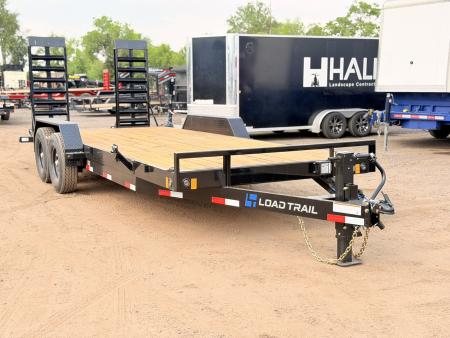
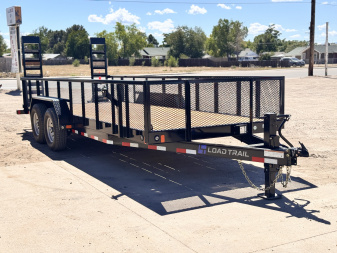
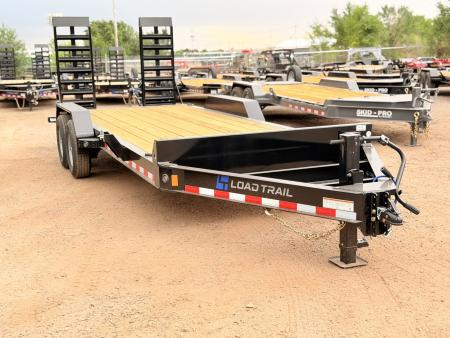
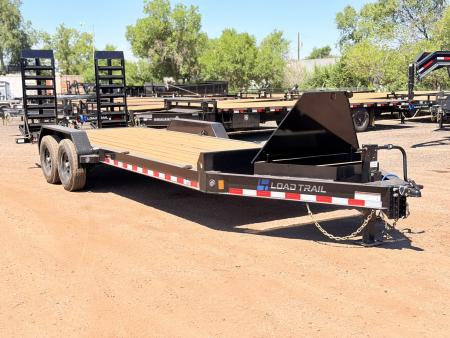
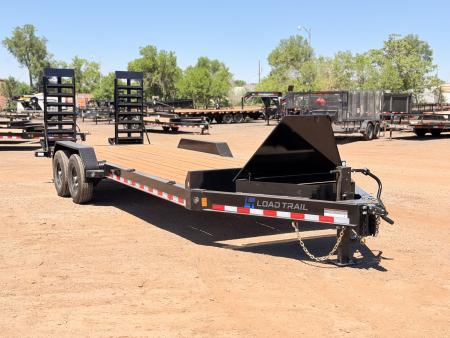
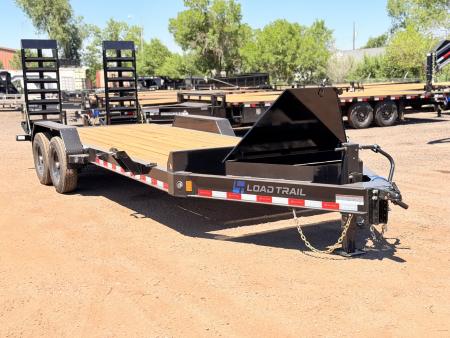
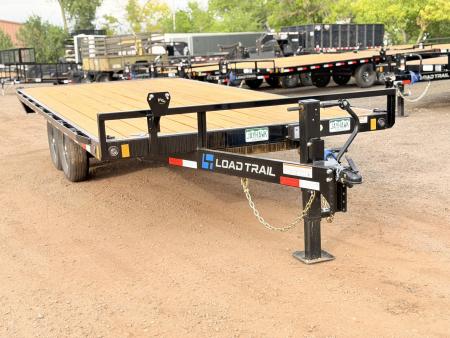
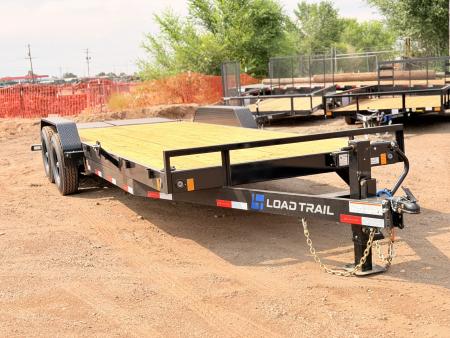
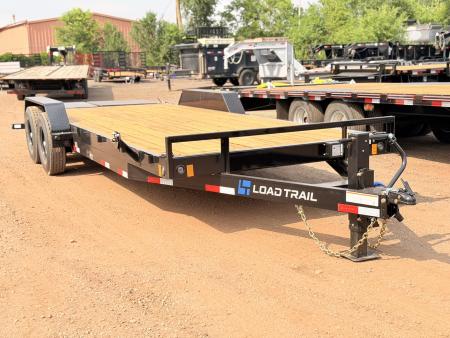
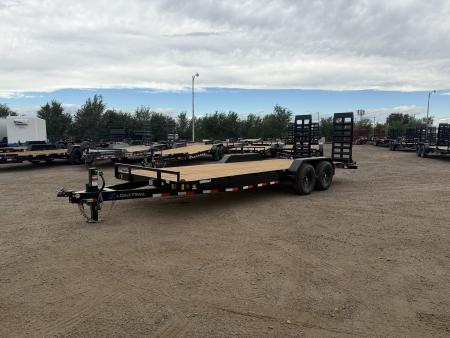
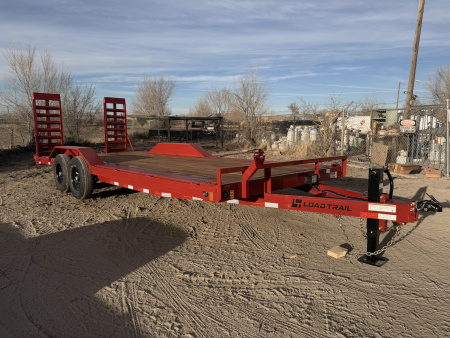
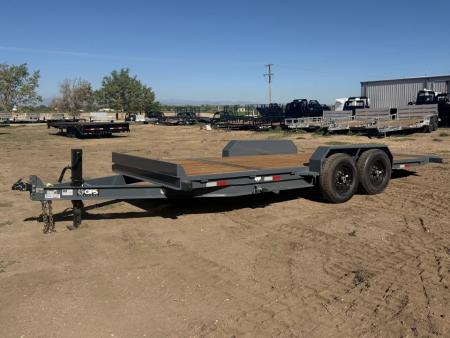
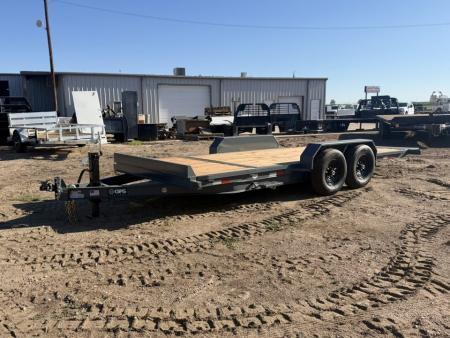
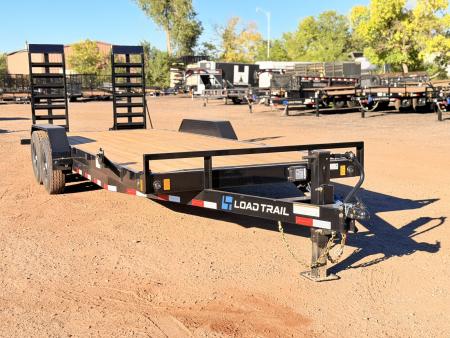
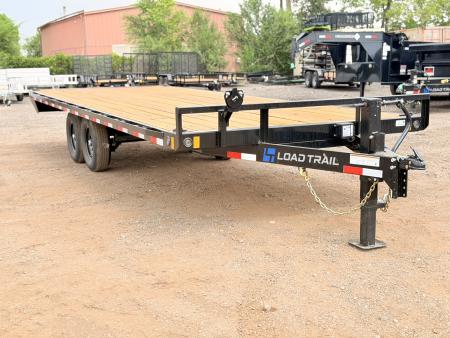
Equipment Trailers for Sale in Denver, Colorado
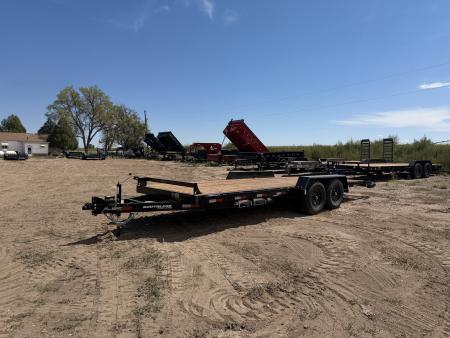
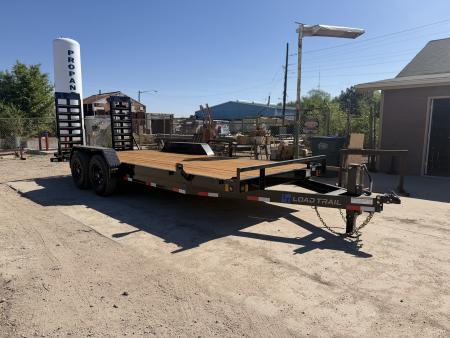
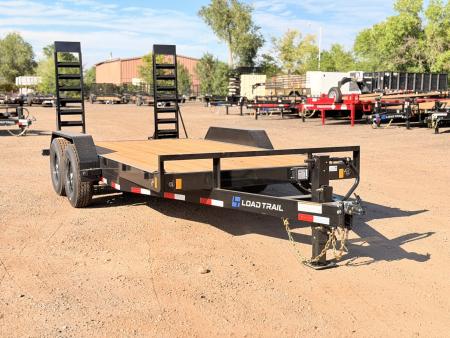
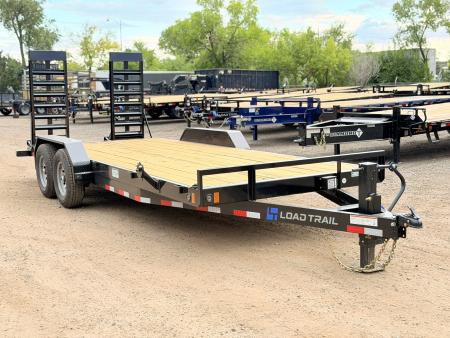
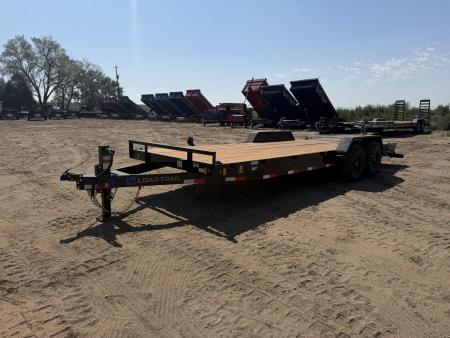
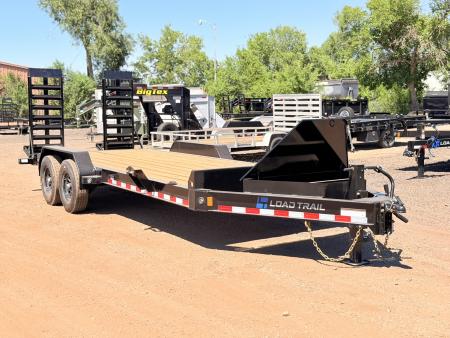
An equipment trailer is what you buy when the load has tracks, a bucket, or a blade on it. Heavier frame, heavier axles, and ramps built to take the weight of a machine driving up them rather than a car rolling on. Our stock runs from 7K up past 24K GVWR in decks from 12 to 25 feet, at our Commerce City lot and the Truck Center in Fort Lupton.
Matching the Trailer to the Machine
Start with the operating weight of your heaviest machine, from the spec plate rather than memory, then add the attachments you carry with it. Buckets, forks, and augers add up faster than people expect. Whatever that total is, you want a GVWR comfortably above it, not right at it.
7K to 14K
Compact equipment territory. A small tractor, a walk-behind, a mini skid, or a stand-on machine with attachments. These are the sizes a three-quarter-ton truck will still pull without drama.
14K to 24K and Up
Full-size skid steers, compact track loaders, mini excavators, and backhoes. Heavier axles, bigger brakes, and the deck length to keep the machine and its attachments on the trailer instead of hanging off the back.
Ramps, Dovetails, and Getting the Machine On
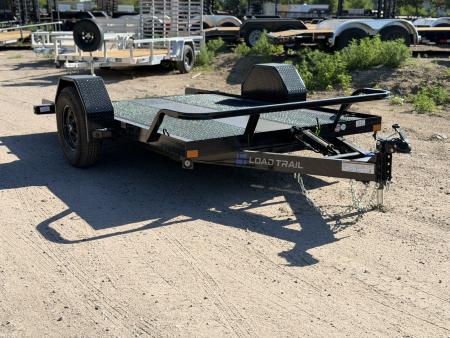
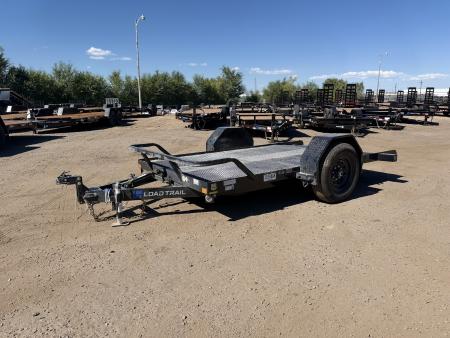
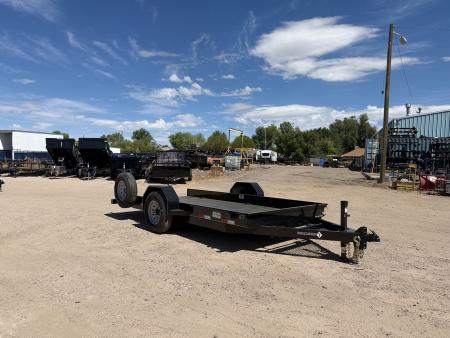
Loading is where equipment trailers earn their money. Fold-down and slide-in ramps cover most machines. A dovetail shortens the approach angle so a low-clearance track loader does not high-center at the transition. If your machine sits especially low or you load alone in tight quarters, a tilt trailer drops the whole deck to the ground and removes the ramp from the equation. For heavier and longer loads that outgrow a bumper pull, look at gooseneck trailers.
Equipment Trailer or Car Hauler?
People shop these interchangeably and they should not. A car hauler is rated around 7K to 10K and built for wheeled vehicles that spread their weight across four tires. An equipment trailer carries concentrated loads on steel tracks and is built accordingly. If the machine has tracks or a hydraulic arm, you are shopping this page.
Equipment Trailer Questions, Answered
What size equipment trailer do I need?
Take the operating weight of your heaviest machine off its spec plate, add the attachments you haul with it, and choose a GVWR comfortably above that total rather than right at it. Compact machines usually land in the 7K to 14K range; full-size skid steers, track loaders, and mini excavators need 14K and up.
What is a dovetail and do I need one?
A dovetail is the angled section at the rear of the deck. It shortens the transition so a low-clearance machine does not high-center where the ramps meet the deck. If you run a compact track loader or anything that sits low, it makes loading considerably easier.
Should I get a bumper pull or a gooseneck equipment trailer?
Bumper pull is simpler, cheaper, and fine for most compact equipment. A gooseneck mounts in the truck bed, tows steadier under heavy loads, turns tighter, and carries more, which is why the heavier equipment trailers are built that way.
Can I load a skid steer on a car hauler?
You should not. A car hauler is built for wheeled vehicles spreading weight over four tires and is typically rated 7K to 10K. A skid steer concentrates weight on tracks or a short wheelbase and will overload the axles and deck of a car hauler.
What truck do I need to pull an equipment trailer?
It depends on the trailer rating plus the machine on it. A three-quarter-ton handles most 7K to 14K bumper pull setups. Once you are above that, especially with goosenecks, you are into one-ton territory. Bring your truck by and we will check the numbers against your hitch and rating.