
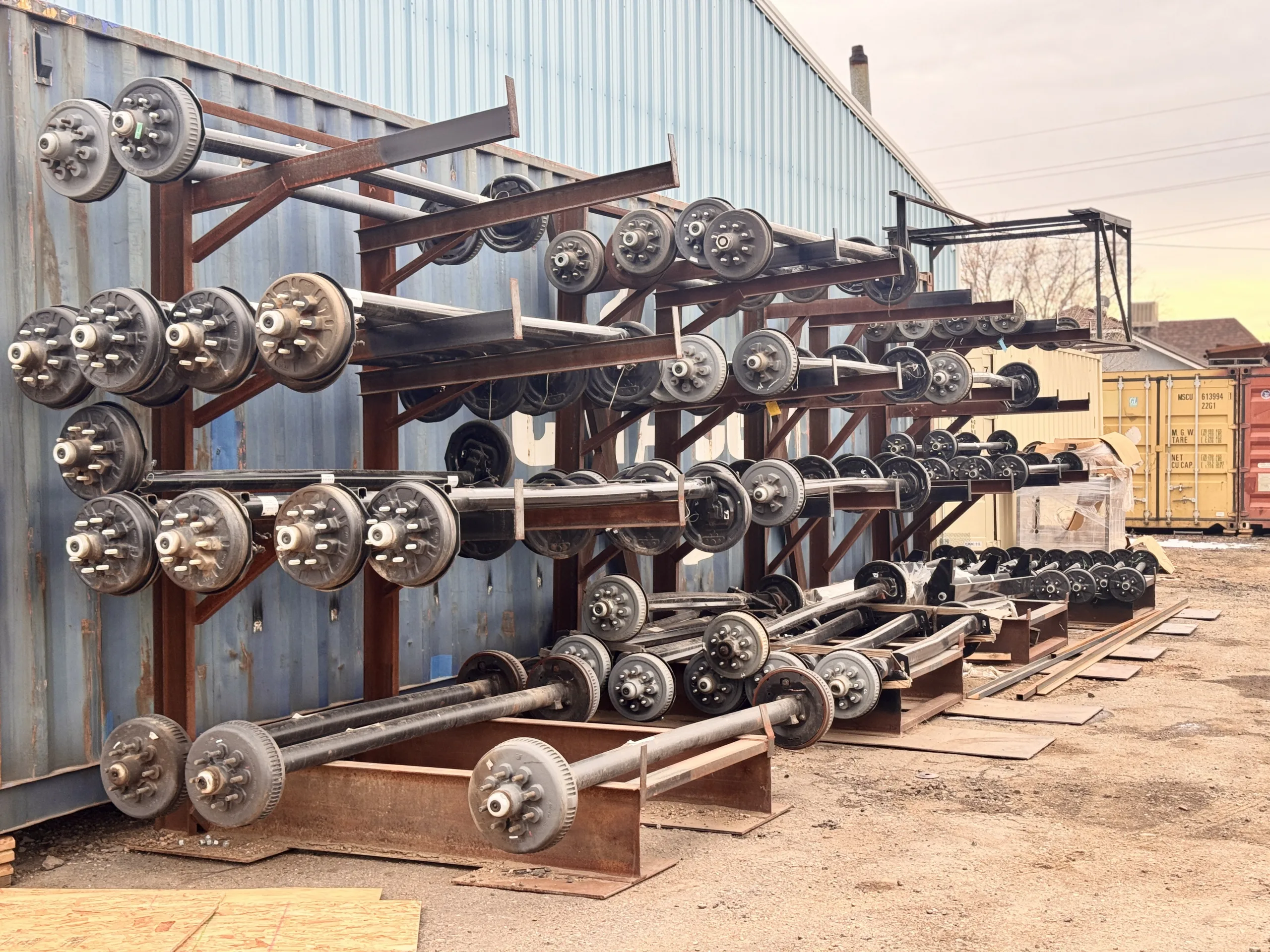
Which Axle Should You Trust? Dexter vs. Lippert vs. Duratek
Generally, the axle you run isn't something most people worry about, but among trailer users, the "Dexter vs. Lippert" debate is real. Many operators both in person and on forums will tell you Dexter is the only way to go. While that is a strong choice with a great history, Lippert remains a definitely viable option, too. There is even a third player that is less well-known but slowly building a strong customer base: Duratek.
Understanding the Market
The axle industry has historically been somewhat diverse, though Dexter and Lippert hold massive market share and cover almost all major trailer OEMs.
-
Dexter primarily deals with brands like Load Trail and Diamond T, serving massive commercial customers.
-
Lippert almost entirely dominates the RV space, though brands like Southland Trailers run their axles as well.
A common complaint is that Lippert doesn't make a "commercial grade" product; however, that is simply not true.
The Reality of Reputation
Historically, both manufacturers have faced occasional quality control hurdles. Lippert, however, faced a period of highly publicized failures. Specifically regarding welds and spindles that created a "legacy of doubt" among some veteran haulers. These reports included everything from bent axle beams to backing plate and hub failures.
Fortunately, those issues are largely in the past. While I can't predict the future, most of the problems users were reporting have since been resolved. Today, Lippert has updated their manufacturing standards to a level that our own service department considers just as reliable as their competitors for the vast majority of modern applications.
Which One Should You Choose?
If you want a straight answer on who is better today, the truth is: it depends.
-
When Buying a New Trailer: If the deciding factor is the axle, I might lean toward Dexter because they offer some specific niche advantages (more on that below). That said, if you are looking at two similar trailers where one has Dexter and the other has Lippert, focus on the rest of the trailer's features instead of the axles alone.
-
When Buying Replacement Parts: For individual components like bearings, races, or grease seals I recommend going with whichever brand offers the best price. Since all three manufacturers produce standardized running gear and hub assemblies, you can prioritize value while still ensuring correct fitment.
The 8K Distinction: Where Dexter Wins
Singling out Dexter is usually only necessary when discussing heavy-duty applications. A major distinction I make to any customer looking for 8,000 lb (8K) axles involves the brakes. Stopping power is a huge factor in safe towing, and this is where the brands differ:
-
Dexter 8K axles typically run a larger 12 ¼" x 3 ⅜" brake shoe.
-
Lippert 8K axles (specifically their hybrid series) often run a 12" x 2" brake shoe.
Essentially, the Lippert 8K axle is often still running a 7K brake assembly, while Dexter provides significantly more surface area for stopping.
Interchangeability and Availability
Every serious shop stocks Dexter parts. While Lippert’s aftermarket availability may be hit or miss, most wear items are fortunately interchangeable. For standard 3,500-lb, 5,200-lb, or 7,000-lb axles, components like bearings, races, hubs, and seals usually swap right over.
This perception that parts don't interchange is mostly an effect of distribution. General trailer dealers go heavy on Dexter, whereas RV dealers (who sell Lippert-equipped campers) stick to the Lippert aftermarket network. Because the parts are compatible, I generally don't have qualms about whether a trailer is equipped with Dexter or Lippert.
Where Duratek Fits In
Duratek is a newer company, having started manufacturing axles in 2016. Despite being newer, they offer a very comparable product that typically costs less. Although they may not be widely seen on many original equipment manufacturers, their direct replacement axles and parts work seamlessly with existing brands. We classify their products as commercial grade.
Our shop stocks both Dexter and Duratek, and we find them very comparable. Having carried them for a few years now, we haven't seen any major failure trends with the Duratek line.
Side Note: If you’re in the process of replacing parts, remember that grease seals should only be used once. If you've already seated the hub, that seal is used. Even if you take the hub back apart before hitting the road, you should replace the seal. Some sources claim you can reuse them, but in our experience, it’s not worth the risk.
The Risk of the Unknown
There are other axle brands on the market beyond these three, but I offer a word of caution: stick to the known names. Every manufacturer, no matter how good, will eventually face a defect or an engineering hurdle. The difference lies in how they handle it. Brands like Dexter, Lippert, and Duratek are battle-tested; they have the infrastructure to handle critical errors and the longevity to honor warranties.
Take the Lippert nuance, for example. While they may have a public track record of past issues, that history actually proves they have the resources to identify and fix structural flaws. Many smaller, unproven brands might not have that capacity, potentially leaving you stranded without parts or support.
The Verdict
Why do so many users choose Dexter over Lippert? It’s simple: Lippert focused on the consumer (RV) market first. This created a perception that their product wasn't "commercial grade," which, combined with old stories of bent tubes, made many haulers apprehensive.
However, the gap is much smaller than people think. I wouldn't fault you for ruling out Lippert on an old trailer revival based on past experiences, but if you need an axle today and Lippert is in stock, it is a solid product.
Our current inventory consists mostly of Dexter and Duratek. By stocking these two, we ensure we have parts for all applications, many of which can be picked up the same day.